Every seasoned property manager knows the dread of a late-night phone call in the dead of winter. When the temperature plummets below freezing, the risk of a plumbing disaster skyrockets. The call usually starts the same way: a panicked tenant reporting that water is gushing through the ceiling or pooling in the basement.
Dealing with emergency repairs is an inevitable part of managing real estate, but burst pipes are entirely preventable. Relying on your tenants to leave the faucets dripping or hoping the drywall insulation is thick enough is not a winning strategy. When a pipe freezes, expands, and bursts, you are not just looking at a plumbing bill—you are looking at water mitigation, ruined flooring, destroyed drywall, and potentially paying to relocate a displaced tenant.
In this guide, we will break down exactly how to winterize your property's plumbing infrastructure and the commercial-grade hardware you need to protect your investment before the cold weather hits.
The True Cost of a Burst Pipe
Many new real estate investors severely underestimate the financial devastation of a sudden water leak. According to industry data, water damage and freezing account for a massive percentage of property insurance claims, with average repair costs easily exceeding $10,000 for a severe multi-room flood.
When you factor in your insurance deductible, the lost rental income during the repair phase, and the premium hikes that follow a major claim, a single frozen pipe can instantly wipe out your cash flow for the entire year. Preventative maintenance is no longer just a best practice; it is a financial necessity for protecting your ROI.
Identifying the Danger Zones in Your Rental
Before you can protect your pipes, you need to identify where they are most vulnerable. Standard interior plumbing is rarely the culprit. Instead, focus your winterization efforts on these high-risk areas:
Crawlspaces and Unfinished Basements: Any plumbing running under the floorboards in unheated spaces is highly susceptible to freezing drafts.
Exterior Walls: Pipes routed through exterior walls (like those leading to outdoor hose bibs or kitchen sinks on outside walls) lack the ambient heat of the unit's interior.
Attics and Garages: Water lines running to overhead washing machines or utility sinks in uninsulated garages are prime targets for extreme temperature drops.
Tape of thermal insulation foil for water pipe is used to prepare domestic plumbing for winter frosts.
Proactive Defense: Heat Tape and Cable Systems
Foam pipe insulation sleeves are a good start, but they only delay the freezing process; they do not generate heat. To actively prevent freezing in your property's most vulnerable zones, you need to apply direct, regulated warmth.
This is where commercial-grade heating cables become an investor's best friend. By wrapping your high-risk metal and plastic pipes, you create a localized heat source that keeps the water flowing regardless of the ambient temperature in the crawlspace or basement.
For landlords looking to thoroughly secure their properties, installing the 160FT Heating Cable for Metal and Plastic Home Pipes provides energy-efficient, continuous freeze protection. Because it is designed to keep water flowing even at -40℉, it is a set-it-and-forget-it solution that eliminates the need to constantly monitor the weather forecast. You can browse our full selection of preventative maintenance hardware in the Landlord Supply Store Shop.
The Ultimate Failsafe: Automatic Water Shut-Off Valves
Even with the best preparation, extreme blizzards, prolonged power outages, or simple tenant negligence can still lead to a cracked pipe. When that happens, the total cost of the damage is entirely dependent on one factor: how fast the water is turned off.
If a pipe bursts at 2 AM and the tenant doesn't notice until they wake up at 7 AM, you have five hours of pressurized water flooding the unit.
The modern solution to this nightmare scenario is an automated shut-off system. The YoLink DIY Automatic Water Leak Detection & Shut-Off Starter Kit acts as a 24/7 security guard for your plumbing. Here is how it protects your bottom line:
Instant Detection: Wireless leak sensors are placed in high-risk areas (under water heaters, beneath kitchen sinks, and near washing machines).
Automatic Intervention: The moment a sensor detects standing water, it signals the EVO Valve Operator installed on your property's main water line.
Complete Shut-Off: The motorized valve automatically closes, shutting off the water supply to the entire building in seconds—long before a flood can destroy your flooring and drywall.
Tenant Communication: What They Need to Do
While you should never rely solely on tenant behavior to protect your physical asset, communication is still a vital layer of defense. As winter approaches, send a standardized email to all your renters outlining your cold-weather policies.
Instruct them to:
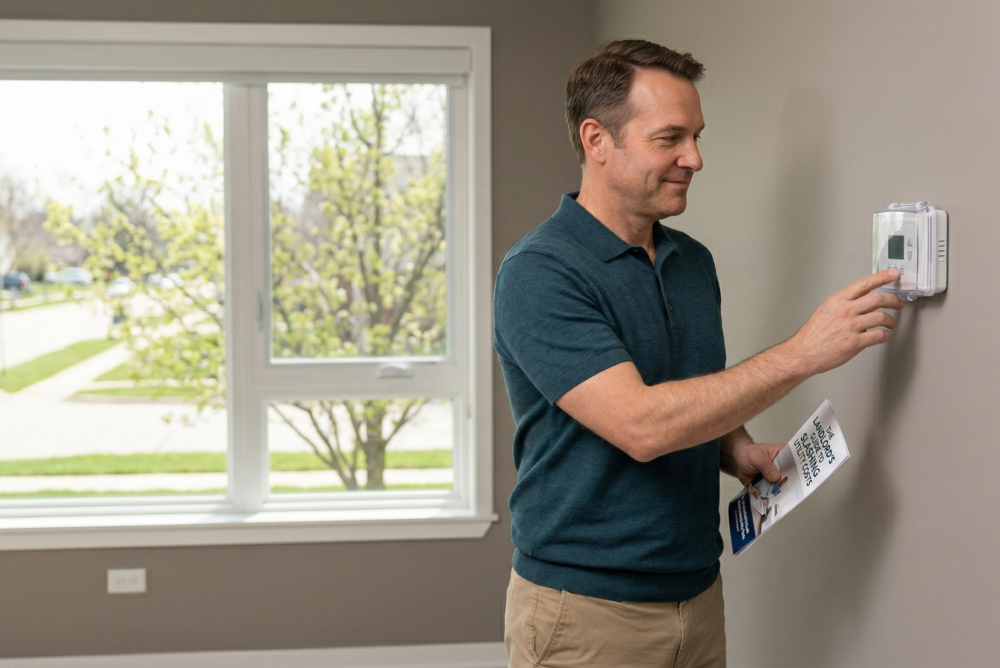
Never drop the unit's thermostat below 65°F, even if they leave for a winter vacation.
Open the cabinet doors beneath kitchen and bathroom sinks during extreme freezes to allow warm interior air to circulate around the pipes.
Ensure all windows and exterior doors are fully shut and locked to prevent freezing drafts from hitting nearby baseboard heating pipes.
Conclusion
Stopping a plumbing disaster requires proactive action. A small upfront investment in heating cables and automated shut-off valves is infinitely cheaper than a massive emergency repair bill, a mold remediation crew, and a vacant unit.
Protect your rental income, preserve your property's infrastructure, and finally get a good night's sleep during the winter months. Equip your portfolio with commercial-grade damage prevention tools from Landlord Supply Store today.
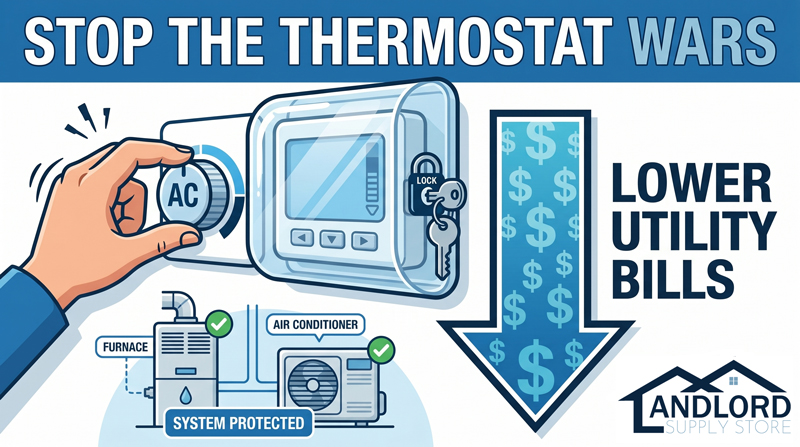
Ask any seasoned property manager about their biggest operational headaches, and "thermostat wars" will almost certainly make the top three. It is a tale as old as real estate: a tenant moves in, the summer heat hits, and suddenly the air conditioning is set to a freezing 60°F with the...
Every landlord dreads the 2:00 AM phone call. Whether it’s a panicked tenant reporting a gushing pipe, a broken front door, or a blaring alarm, the immediate instinct is often to pick up the phone and call a 24-hour emergency contractor.
But responding swiftly to a rental property emergency doesn’t mean...
If you include utilities in your rent, you already know the anxiety of opening the monthly electric or gas bill. But even if your tenants pay their own utilities, extreme energy usage is still costing you money. Why? Because when a tenant leaves the AC running at 62 degrees in...
The Danger of Unreported Leaks A snapped key or a dented wall is an annoyance, but water is a property destroyer. A slow, unreported drip under a bathroom vanity or a sudden burst from an aging washing machine hose can flood multiple units, destroy drywall, and wipe out an entire...
To provide the best experiences, we use technologies like cookies to store and/or access device information. Consenting to these technologies will allow us to process data such as browsing behavior or unique IDs on this site. Not consenting or withdrawing consent, may adversely affect certain features and functions.
Functional
Always active
The technical storage or access is strictly necessary for the legitimate purpose of enabling the use of a specific service explicitly requested by the subscriber or user, or for the sole purpose of carrying out the transmission of a communication over an electronic communications network.
Preferences
The technical storage or access is necessary for the legitimate purpose of storing preferences that are not requested by the subscriber or user.
Statistics
The technical storage or access that is used exclusively for statistical purposes.The technical storage or access that is used exclusively for anonymous statistical purposes. Without a subpoena, voluntary compliance on the part of your Internet Service Provider, or additional records from a third party, information stored or retrieved for this purpose alone cannot usually be used to identify you.
Marketing
The technical storage or access is required to create user profiles to send advertising, or to track the user on a website or across several websites for similar marketing purposes.