Ask any seasoned property manager about their biggest operational headaches, and "thermostat wars" will almost certainly make the top three. It is a tale as old as real estate: a tenant moves in, the summer heat hits, and suddenly the air conditioning is set to a freezing 60°F with the windows wide open. Come winter, the heat is cranked to 80°F while the tenant walks around in shorts.

Whether you pay for the utilities or the tenant foots the bill, this extreme temperature fluctuation is silently eating away at your bottom line. HVAC systems are simply not designed to run continuously at extreme thresholds.

The most effective, set-it-and-forget-it solution for property owners is upgrading the unit's controls. In this guide, we will break down exactly why installing a landlord thermostat is one of the highest-ROI upgrades you can make for your rental property.

The Hidden Costs of HVAC Abuse

Many landlords mistakenly believe that if the tenant pays their own gas and electric bills, extreme thermostat settings aren't a landlord problem. Unfortunately, this isn't true. The utility bill is only a fraction of the actual cost. The real danger lies in the mechanical strain put on your property's infrastructure.

  • Frozen AC Coils: When a standard thermostat is dropped below 68°F during the peak of summer, the air conditioning condenser rarely gets a chance to cycle off. This continuous operation can easily cause the evaporator coils to freeze solid, leading to a complete system shutdown and a pricey emergency service call.

  • Cracked Heat Exchangers: In the winter, forcing a furnace to run non-stop to maintain 80°F puts immense stress on the heat exchanger. Premature wear here often results in thousands of dollars in replacement costs.

  • Short Cycling: Tenants who constantly fiddle with the dial cause the system to turn on and off rapidly. This "short cycling" burns out capacitors and blower motors years before their expected lifespan.

What is a Landlord Thermostat?

A landlord thermostat (often referred to as a temperature-limiting thermostat) is a specialized device engineered specifically for rental properties, vacation homes, and multi-family units.

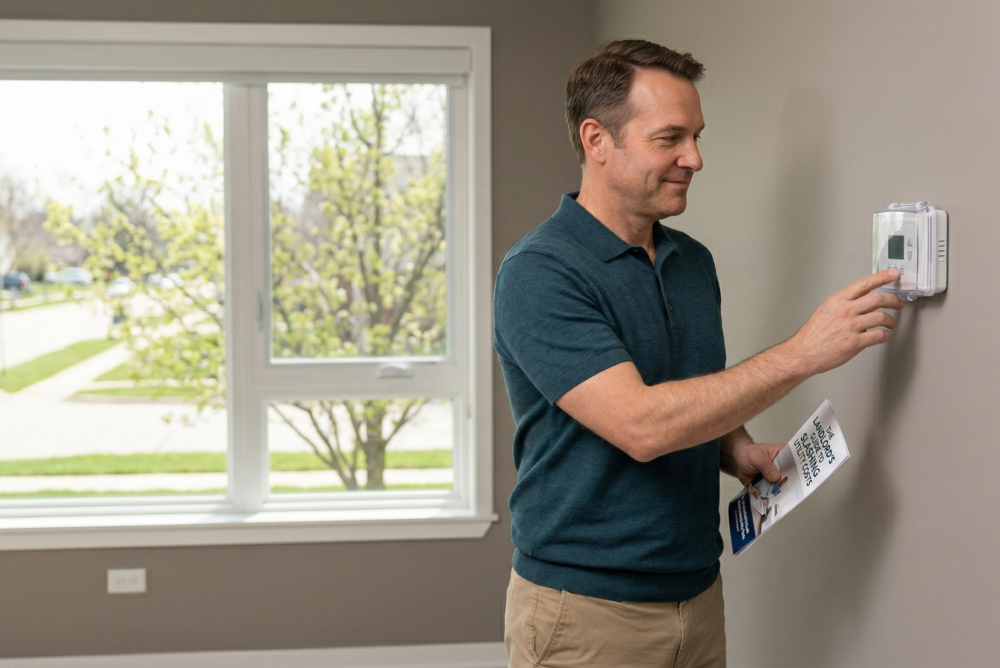
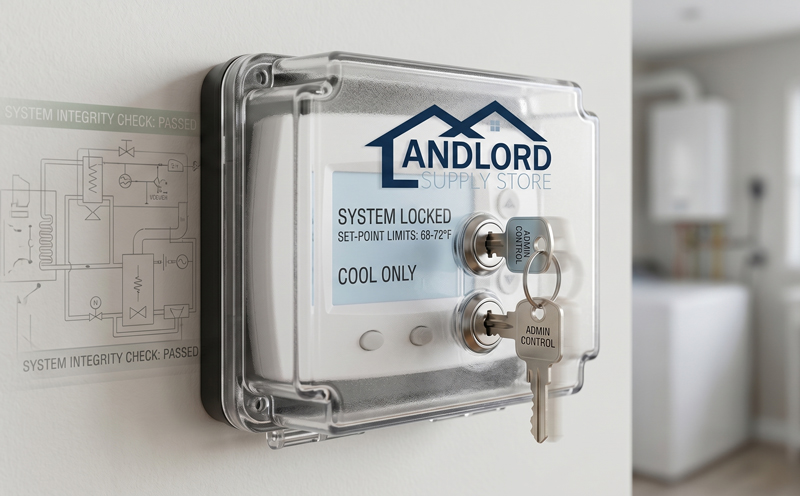
To the tenant, it looks and operates exactly like a standard digital thermostat. They can turn the system on, switch between heat and cool, and adjust the temperature up and down. However, the internal programming contains a hard-coded limit set by the property owner.

For example, a tamper proof thermostat might be hard-coded so the heat cannot be set higher than 72°F, and the AC cannot be set lower than 70°F. No matter how many times the tenant presses the "down" arrow, the system simply will not comply past the designated threshold.

Why Smart Thermostats and Lockboxes Aren't the Answer for Rentals

A common mistake DIY landlords make is installing consumer-grade smart thermostats (like a Nest or Ecobee) to monitor unit temperatures remotely. While these are fantastic for primary residences, they often create more problems than they solve in a rental environment.

  • Wi-Fi Headaches: Smart thermostats require a constant Wi-Fi connection. If a tenant changes their router password or switches internet providers, your remote access is instantly severed.

  • Factory Resets: Tech-savvy tenants can easily Google how to perform a factory reset on a consumer smart thermostat, completely bypassing any PIN codes or limits you have set.

  • Privacy Concerns: Many tenants feel uncomfortable knowing their landlord can monitor their exact temperature preferences and home-away routines via an app.

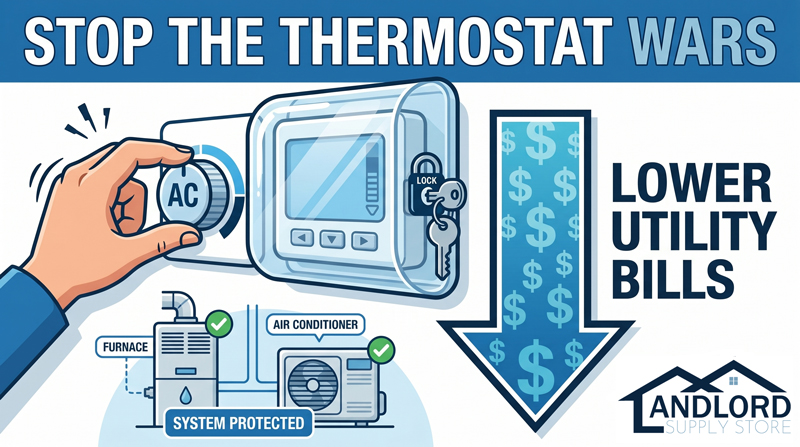
  • The Lockbox Loophole: Another common—and deeply flawed—workaround is the traditional clear plastic thermostat lockbox. While they seem like a cheap fix, determined tenants simply slide paperclips, bobby pins, or butter knives through the lockbox's ventilation slats to push the buttons. If you try to outsmart them by taping over those air vents, you block the ambient room air from reaching the thermostat's internal sensor. This causes the unit to read the temperature incorrectly, often resulting in the HVAC system running non-stop—completely defeating your goal of saving energy. Plus, a plastic cage on the wall instantly creates an adversarial relationship with your renter.

In contrast, dedicated tamper proof thermostats (or landlord thermostats) solve all of these problems invisibly. They do not rely on Wi-Fi, and they don't require a hostile-looking plastic cage. The limits are hard-wired into the circuit board or protected by non-bypassable administrative settings. It is a physical, localized solution that cannot be hacked via an app, poked with a paperclip, or reset by the end-user.

The ROI of Tamper Proof Thermostats

Upgrading your units is an upfront investment, but the return is incredibly fast. Here is how these devices pay for themselves:

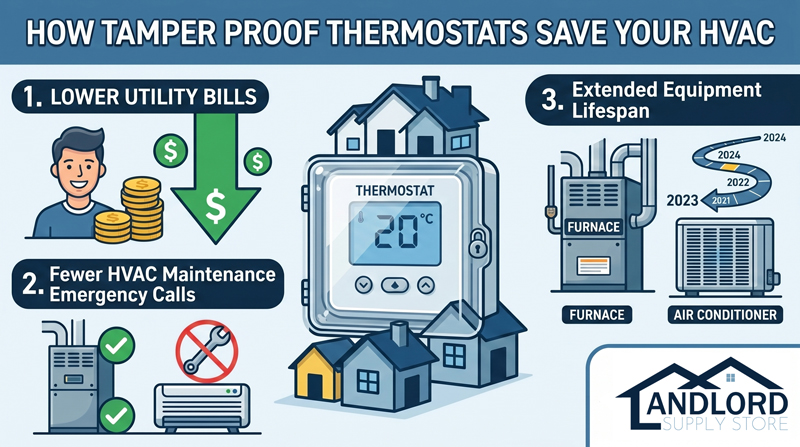
  • Immediate Utility Reductions: If you operate a multi-family property with shared utilities or a short-term rental (Airbnb/VRBO), capping the temperature limits can reduce your monthly heating and cooling bills by 15% to 20%.

  • Fewer Maintenance Dispatches: By preventing frozen coils and overworked blowers, you drastically reduce the number of "no heat" or "no AC" emergency calls you receive on the weekends.

  • Extended Equipment Lifespan: An HVAC system that cycles normally will easily outlast one that is constantly pushed to the limit. Extending the life of a $6,000 furnace by even three years provides massive long-term savings.

How to Implement the Change Smoothly

If you are transitioning an existing tenant to a tamper proof thermostat, communication is key. Frame the upgrade as a positive addition to the property.

You can simply let them know that you are updating the property's HVAC controls to a newer, more precise digital model to ensure the system runs reliably year-round. Because these limits (e.g., 70°F for AC, 72°F for heat) are well within the bounds of standard living comfort, most tenants will never even realize a limit is in place.

Protecting your rental property's most expensive mechanical systems shouldn't require constant monitoring or arguing with tenants over the utility bill. By removing the temptation to abuse the system entirely, you protect your cash flow and gain peace of mind.

If you are ready to stop the thermostat wars and protect your HVAC equipment, explore the selection of commercial-grade property management controls at Landlord Supply Store to find the right fit for your units.


Related

Projects